


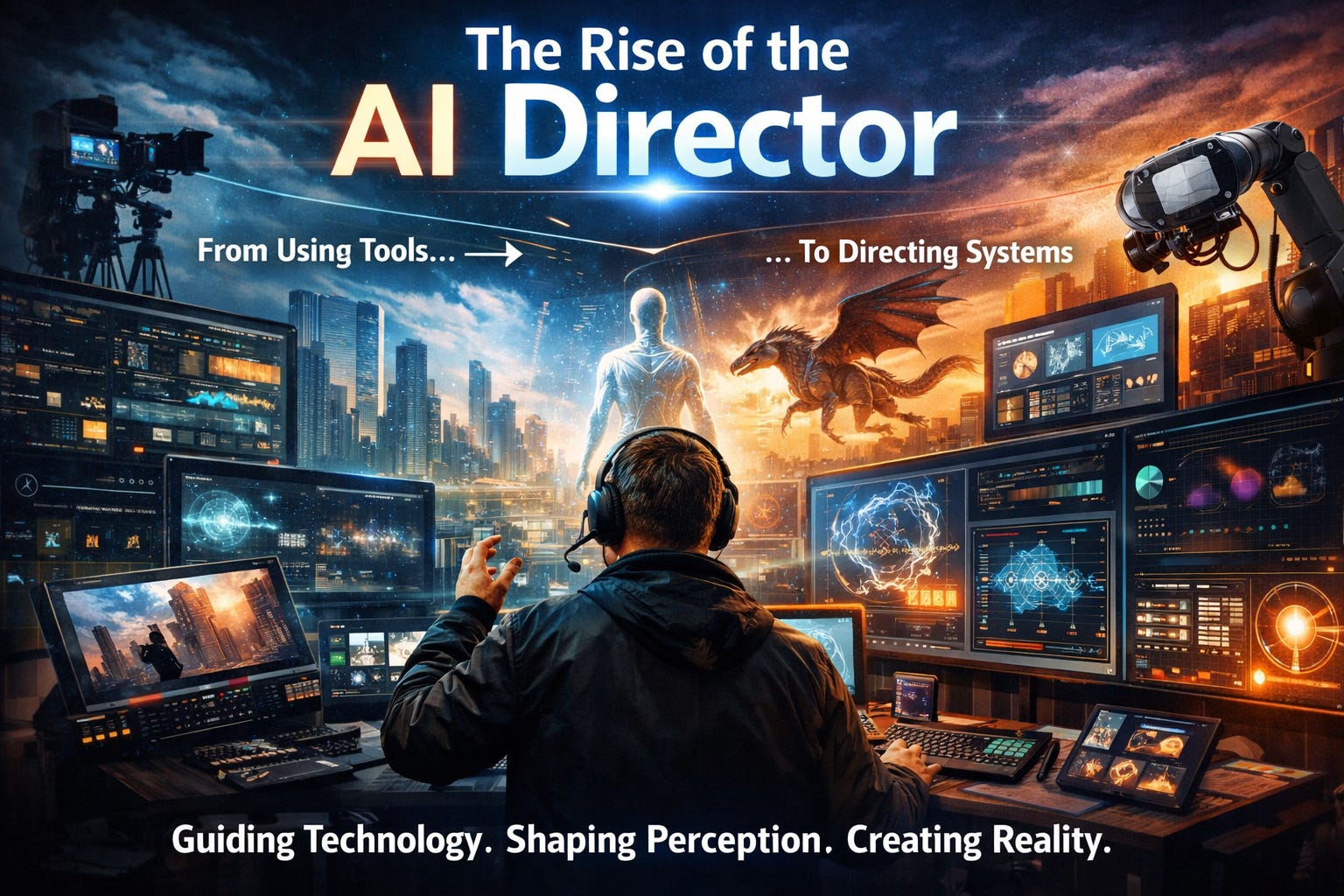
Careers are no longer static ladders; they are living systems. As technology reshapes how value is created, new roles emerge; not as gimmicks, but as necessities. One such role gaining quiet legitimacy is the AI Director. At first glance, the title may sound aspirational. In reality, it captures a deep shift in how creativity, technology, and leadership now intersect.
From Using Tools to Directing Systems
For years, creative work has been defined by mastery of tools cameras, software, editing suites, design platforms. AI changes that equation. When tools become generative and autonomous, the differentiator is no longer operation but direction.
An AI Director does not simply prompt a model or generate an image. They orchestrate systems:
selecting and tuning models,
shaping aesthetic intent,
defining constraints and narratives,
iterating across image, motion, sound, and interaction.
In other words, they direct intelligence the way a film director directs actors, light, and space.
Perceptual Realism: The New Creative Benchmark
A key insight behind the AI Director role is the distinction between fiction and perception. An image can be referentially fictional yet perceptually realistic meaning it aligns with how humans experience light, depth, texture, movement, and sound in the real world.
This matters because humans don’t respond to technical accuracy alone; they respond to sensory coherence. AI excels at producing content at scale, but without human direction it often lacks perceptual unity. The AI Director ensures outputs “feel real” to the nervous system, even when the content is imagined.
That responsibility shaping perception rather than pixels—is what elevates the role.
Why This Role Exists Now
Three forces make the AI Director inevitable:
Explosion of Generative Capability AI can now produce visuals, music, voice, scripts, and motion. Without leadership, abundance becomes noise.
Demand for Coherent Experiences Brands, films, and campaigns no longer succeed with isolated assets. They require consistency across mediums and moments.
Shift from Prompting to Orchestration The work has moved from one-off prompts to pipelines, workflows, and feedback loops. Direction, taste, and judgment become scarce skills.
The AI Director sits at the center of these forces.
Not a Trend—A Signal
Skeptics often ask whether such titles are “official.” History suggests that official recognition always lags reality. Roles like Product Manager, UX Researcher, and Data Scientist existed in practice long before they were standardized.
New titles are not vanity; they are signals—early indicators of where work is going. They name responsibilities that already exist but lack language.
What This Means for the Future of Work
AI will not replace creatives or leaders. It will raise the ceiling and in doing so, it will reward those who can:
guide systems rather than operate tools,
combine technical literacy with human taste,
translate complexity into clarity and meaning.
The future belongs to directors of intelligence, not just users of software.
Final Thought
The emergence of the AI Director reminds us that careers are evolving in real time. As technology accelerates, the most valuable roles will be those rooted in direction, perception, and responsibility. The question is no longer whether these roles are real but whether we recognise them early enough to grow into them.

New titles aren’t trends. They’re signals.