


Rethinking employability in an AI-driven economy
For years, the global conversation around employability has focused on skills.
Governments fund skills bootcamps. Universities redesign curricula. Employers list endless “required skills” on job descriptions.
Yet unemployment and underemployment among graduates continue to rise.
The uncomfortable truth is this: skills are not the real problem. Experience is.
And traditional education systems are structurally incapable of fixing it.

The Broken Bridge Between Education and Work
Across the UK, Africa, and emerging digital economies, I have observed the same pattern repeatedly:
Graduates leave university with theoretical knowledge
Employers demand “2–3 years of experience”
Entry-level roles quietly become mid-level expectations
Young professionals are locked out before they begin
Education prepares people to know.
Work requires people to perform.
That gap between knowing and doing is where opportunity collapses.
What makes this crisis worse is that experience itself has become inaccessible.
You cannot gain experience without a job, and you cannot get a job without experience.
This is not a failure of talent.
It is a failure of system design.
Why the Old Solutions No Longer Work
Internships were once the bridge. They no longer scale.
Many are unpaid and exclusionary
Others are purely observational
Most offer no measurable proof of competence
Certifications help, but they rarely reflect real decision-making under real constraints.
Employers don’t struggle to find people who can pass tests.
They struggle to find people who can operate inside ambiguity, deadlines, trade-offs, and accountability.
This is where most education models fall short.
Experience Is a System, Not an Event
One of the biggest misconceptions in workforce development is treating experience as a checkbox rather than a system.
Real experience involves:
Contextual problem-solving
Stakeholder communication
Tool usage under pressure
Iteration, failure, and feedback
Evidence of impact, not participation
You don’t gain this from watching.
You gain it from doing repeatedly, safely, and with structure.
This is where AI introduces a generational shift.
AI as an Experience Generator, Not Just an Assistant
Most conversations about AI focus on automation or productivity.
But AI’s most underexplored role is this:
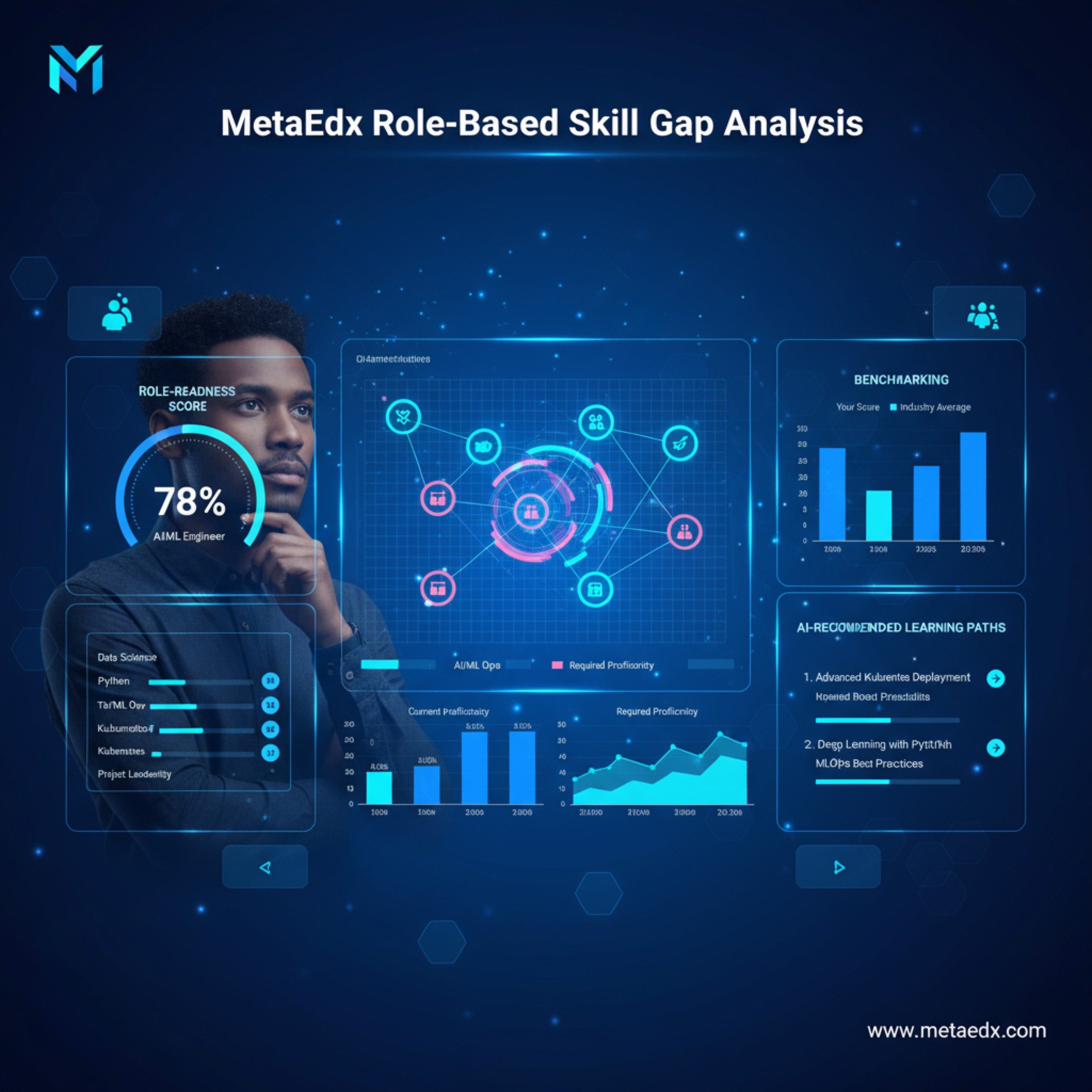
AI can simulate experience at scale.
When designed correctly, AI systems can:
Create realistic work scenarios
Evaluate decision paths, not just outcomes
Adapt difficulty based on user behaviour
Mirror real workplace constraints
Produce verifiable evidence of capability
This is not theory.
It is already happening in sectors like aviation, medicine, and defence.
The opportunity now is to bring this model into career development and employability.
Rethinking Career Entry: From CVs to Capability Proof
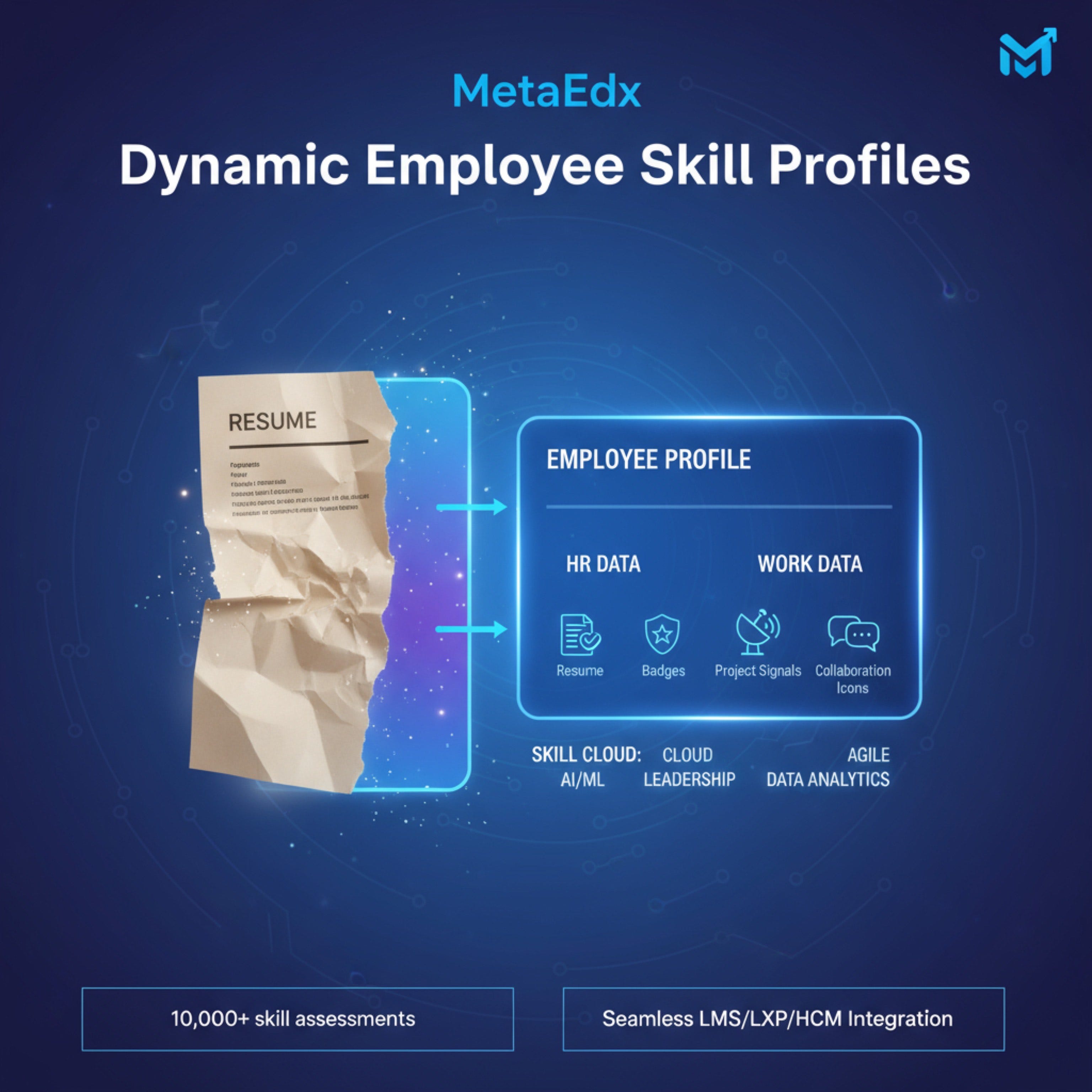
CVs are static.
Degrees are time-based.
Job titles are inconsistent.
But capability is observable.
The future of hiring will not be driven by where you studied, but by:
What problems you have solved
How you approached them
What tools you used
What outcomes you delivered
AI-driven job simulations, micro-internships, and performance-based assessments allow talent to demonstrate readiness before being hired.
This shifts power in three critical ways:
Employers reduce hiring risk
Candidates gain access without gatekeeping
Education becomes outcome-aligned, not credential-driven
Why This Matters for the UK’s Digital Economy
The UK positions itself as a global tech leader.
But leadership requires talent velocity, not just talent supply.
We don’t just need more developers, analysts, designers, and product managers.
We need people who can operate effectively from day one.
AI-enabled experience systems:
Shorten onboarding cycles
Reduce early attrition
Increase diversity by removing informal filters
Enable global talent integration without relocation delays
In a world of distributed work, experience is the new passport.
Building Systems That Outlast Individuals
My work as a founder has been guided by one principle:
The goal is not to create another platform, but to redesign access.
When systems reward proof over pedigree, talent rises everywhere — not just where privilege already exists.
AI gives us the tools to build these systems.
Leadership requires the courage to deploy them responsibly.
The Real Question Ahead
The future of work will not be decided by who learns fastest.
It will be decided by who is allowed to practice.
If we want inclusive growth, competitive economies, and sustainable innovation, we must stop asking young people to wait for opportunity and start giving them environments where opportunity is earned through action.
That is the real work ahead.
And AI, when designed with intention, can finally make it possible.
About the Author
Joseph C. Ugwu is a UK-based technology founder and product leader working at the intersection of AI, workforce development, and digital innovation. He is the founder of MetaEdx, an AI-powered career and job-simulation platform focused on closing the experience gap for emerging talent. His work spans education technology, applied AI, and inclusive digital systems.
For readers interested in ongoing discussions on AI, workforce systems, and experience-based career pathways, I occasionally share reflections and resources with a community here.
Join the MetaEdx Telegram Channel & Community Group to get free access to the program. https://t.me/metaEdx